
Climate Technology: Types, Examples, Benefits and Future
 Ayan
Ayan- •
- 11 MIN TO READ
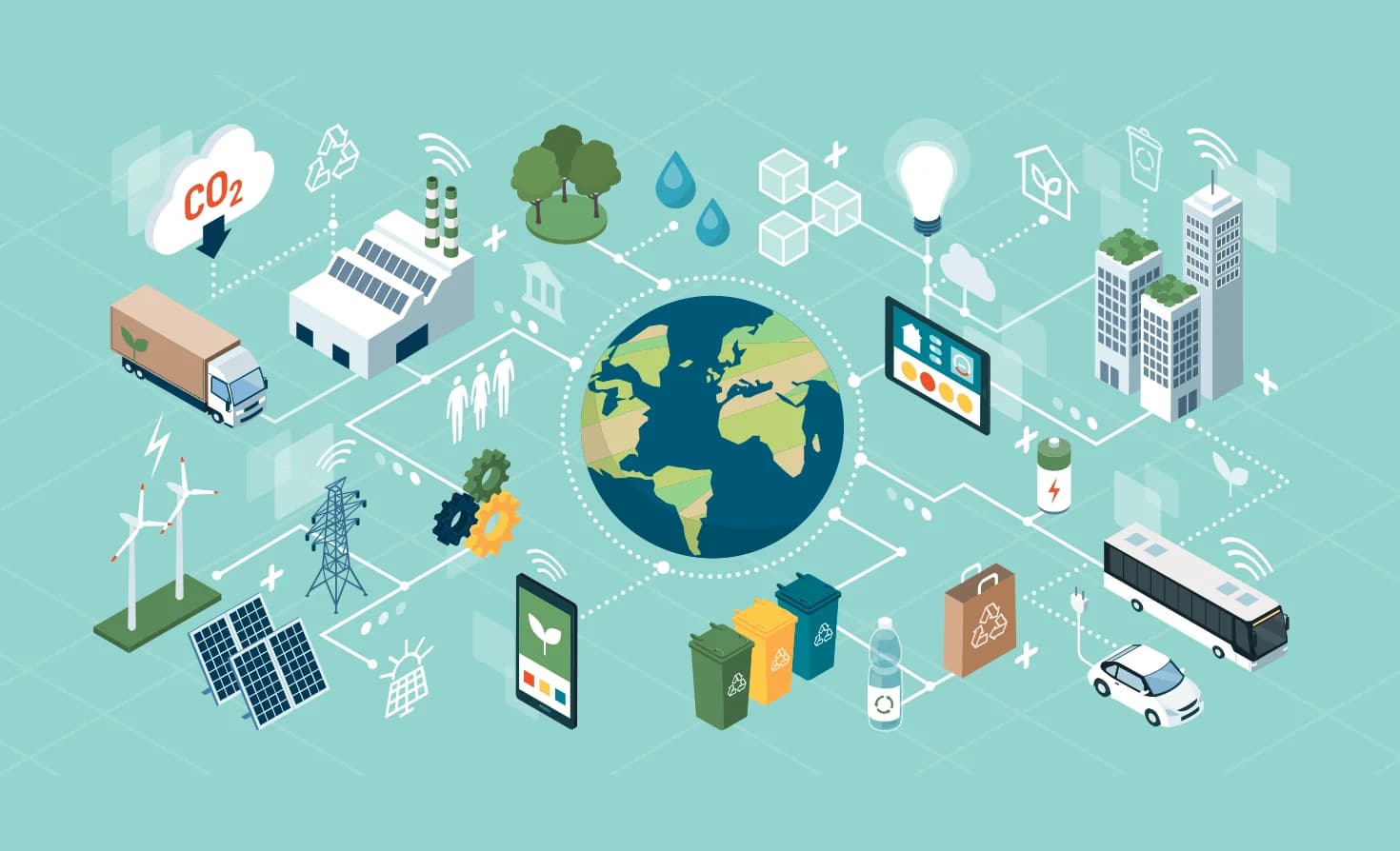
Climate Technology: Types, Examples, Benefits and Future
What Is Climate Technology?
Climate technology refers to tools, systems, and innovations designed to reduce greenhouse-gas emissions, remove carbon dioxide, improve resource efficiency, or help communities adapt to climate-related risks. It includes technologies used in energy, transportation, agriculture, buildings, manufacturing, water management, and environmental monitoring.
Climate technology is commonly divided into three broad categories:
Mitigation technologies, which reduce or remove greenhouse-gas emissions.
Adaptation technologies, which help communities, businesses, and ecosystems manage climate impacts.
Monitoring and assessment technologies, which measure emissions, climate risks, and environmental changes.
For example, solar panels and electric vehicles support emissions reduction, while drought resistant crops and flood warning systems help societies adapt to climate impacts. The United Nations Development Programme describes climate technologies as solutions for both mitigation and adaptation, including renewable energy, energy efficiency, carbon capture, and climate resilient agriculture.
However, climate technology is not a single solution to climate change. Its effectiveness depends on factors such as energy sources, lifecycle emissions, affordability, infrastructure, policy support, and adoption at scale.
Why Is Climate Technology Important?
Climate technology is important because many sectors still depend on fossil fuels, inefficient infrastructure, and resource-intensive production systems. Technologies that reduce emissions or improve resilience can help governments, businesses, and communities respond to these challenges.
Climate technology can support:
Clean electricity generation.
Lower-emission transportation.
More efficient buildings and factories.
Reduced methane and carbon dioxide emissions.
More sustainable agriculture.
Improved water and waste management.
Better climate-risk monitoring.
Protection against floods, heatwaves, droughts, and extreme weather.
The importance of climate tech extends beyond environmental protection. It also affects energy security, public health, industrial competitiveness, food production, and long-term economic resilience.
Specific example
A smart electricity grid can combine solar and wind power with battery storage, demand forecasting, and automated energy management. This can help balance variable renewable generation and reduce dependence on fossil-fuel-based backup power.
Limitation
A technology may appear environmentally beneficial without being completely low carbon. For example, batteries, solar panels, electric vehicles, and data centres require minerals, manufacturing energy, transport, and eventual recycling. Climate benefits should therefore be assessed across the entire lifecycle rather than from the use phase alone.
Main Types of Climate Technology Renewable Energy Technology
Renewable energy technologies generate electricity or heat from sources that are naturally replenished. Major examples include:
Solar photovoltaic systems.
Concentrated solar power.
Onshore and offshore wind energy.
Hydropower.
Geothermal energy.
Ocean and tidal energy.
Renewable energy can reduce emissions when it replaces electricity generated from coal, oil, or natural gas. Solar and wind power are also becoming important components of distributed energy systems, including rooftop solar and community microgrids.
Specific example
A solar-plus-storage microgrid can provide electricity to a remote community, hospital, or industrial facility while reducing reliance on diesel generators.
Limitation
Solar and wind generation varies according to weather and time of day. Large-scale deployment requires grid upgrades, energy storage, transmission capacity, land, and effective power market planning.
Energy Storage and Smart Grids
Energy storage technologies help save electricity for later use. Examples include:
Lithium-ion batteries.
Sodium-ion batteries.
Flow batteries.
Thermal energy storage.
Pumped-storage hydropower.
Compressed-air energy storage.
Hydrogen-based storage.
Smart grids use sensors, software, automation, and data analytics to manage electricity generation and consumption more efficiently.
Specific example
A battery energy-storage system can store excess solar electricity during the afternoon and release it during the evening when demand increases.
Limitation
Different storage technologies have different costs, lifespans, safety requirements, mineral dependencies, and discharge durations. A short-duration battery may not be suitable for storing electricity across several days of low renewable generation.
Electric vehicles can reduce tailpipe emissions and may lower total lifecycle emissions when charged using relatively clean electricity.
Specific example
Electric buses can reduce urban tailpipe pollution while lowering noise and operating costs, especially on high-mileage routes.
Limitation
The climate impact of an electric vehicle depends on battery manufacturing, electricity generation, vehicle size, driving patterns, mineral extraction, and recycling. Electrification is not equally practical for every transport segment.
Green Hydrogen
Green hydrogen is produced by using renewable electricity to split water into hydrogen and oxygen through electrolysis. It may support sectors that are difficult to electrify directly, including:
Steel production.
Fertilizer manufacturing.
Shipping.
Long-distance transport.
Seasonal energy storage.
Some high-temperature industrial processes.
Specific example
Green hydrogen can replace coal-based processes in selected forms of steel production, potentially reducing emissions from heavy industry.
Limitation
Hydrogen production involves energy losses, and the technology requires new pipelines, storage systems, specialized equipment, and reliable supplies of low-carbon electricity. Hydrogen should therefore be used strategically where direct electrification is difficult.
Carbon Capture, Utilisation and Storage
Carbon capture technologies remove carbon dioxide from industrial exhaust gases or directly from the atmosphere. The captured carbon may be:
Stored in deep geological formations.
Used in selected industrial products.
Converted into fuels or chemicals.
Mineralized into stable materials.
Carbon capture and storage can be relevant for cement, chemicals, steel, refining, and other industries where eliminating emissions is technically difficult.
Specific example
A cement plant may capture carbon dioxide from its production process and transport it to a geological storage site.
Limitation
Carbon capture can require substantial energy, infrastructure, monitoring, and investment. It should not be treated as a substitute for reducing fossil fuel use or improving energy efficiency. Storage permanence, leakage monitoring, and transparent emissions accounting are also important.
Climate-Smart Agriculture
Climate smart agriculture uses technology and improved practices to increase productivity, reduce emissions, and improve resilience. Examples include:
Precision irrigation.
Soil and crop monitoring.
Drought resistant seeds.
Satellite based farm analytics.
Digital weather forecasting.
Methane reduction technologies.
Regenerative agriculture tools.
Controlled environment farming.
Specific example
A sensor based irrigation system can provide water only when crops need it, helping reduce water waste and protect yields during dry periods.
Limitation
Access to sensors, connectivity, financing, training, and reliable agricultural data may be limited, especially for small scale farmers. Technology must be adapted to local climate, soil, economic, and cultural conditions.
Climate Monitoring and Artificial Intelligence
Climate monitoring technologies collect and analyse data about emissions, weather, land use, oceans, biodiversity, and physical climate risks. They include:
Earth observation satellites.
Remote sensing.
Internet of Things sensors.
Digital twins.
Carbon accounting software.
Climate risk modelling.
Artificial intelligence and machine learning.
Early warning systems.
Specific example
Machine-learning systems can analyse satellite images to identify deforestation, estimate crop stress, or detect changes in coastal areas.
Limitation
AI systems require high quality data and computing infrastructure. Incomplete datasets, biased models, false positives, and high energy consumption can reduce their environmental and social value.
Important areas for climate technology in India include:
Solar power and distributed energy.
Battery storage and grid modernization.
Electric two wheelers and buses.
Green hydrogen for industry.
Climate smart agriculture.
Water purification and efficient irrigation.
Waste management and circular economy systems.
Heat resilient buildings.
Air-quality and emissions monitoring.
Carbon markets and industrial decarbonization.
India’s climate tech ecosystem includes companies working in renewable energy, electric mobility, carbon technology, water management, recycling, and other decarbonization areas. Recent reporting estimated that India’s climate-tech sector had attracted $12.8 billion across 1,583 firms, with annual funding reaching $2.6 billion in 2025. These figures are source specific and should be checked against the original report before publication.
Limitation
India’s climate-tech adoption may be affected by financing costs, uneven infrastructure, policy changes, grid constraints, supply chain dependence, affordability, and differences between urban and rural markets. Solutions should be evaluated according to local conditions rather than copied directly from other countries.
Benefits of Climate Technology Climate technology can provide several benefits:
Emissions reduction: Renewable energy, electrification, efficiency, and carbon removal can reduce or manage greenhouse gas emissions.
Energy security: Local renewable generation and efficiency can reduce dependence on imported fuels.
Economic development: Climate tech industries can create new businesses, jobs, and manufacturing opportunities.
Public health: Cleaner transport and electricity can reduce air pollution.
Climate resilience: Early warning systems, resilient infrastructure, and drought-management tools can reduce vulnerability.
Resource efficiency: Smart systems can reduce waste of energy, water, materials, and food.
Industrial competitiveness: Low carbon production can help companies respond to changing regulations and customer demand.
Verified evidence:
Climate-tech assessments commonly group solutions into emissions mitigation, climate adaptation, and climate monitoring. They also identify areas such as renewable energy, electric mobility, long-duration storage, green hydrogen, carbon removal, low-carbon materials, and sustainable agriculture as important technology categories.
Qualification:
Climate technology does not automatically guarantee sustainability. A responsible assessment should consider lifecycle emissions, land and water use, mineral supply chains, labour conditions, waste, rebound effects, affordability, and whether the solution reduces absolute emissions or only improves efficiency.
Challenges and Limitations The climate-tech sector faces several major challenges:
High upfront capital requirements.
Long development and deployment timelines.
Limited infrastructure.
Regulatory uncertainty.
Difficult permitting processes.
Dependence on critical minerals and global supply chains.
Uncertain commercial returns.
Difficulty measuring actual emissions reductions.
Greenwashing and exaggerated environmental claims.
Public resistance or lack of user adoption.
Many climate technologies already exist technically, but scaling them requires manufacturing capacity, infrastructure, financing, policy support, skilled workers, and reliable markets. McKinsey notes that the central challenge is often accelerating deployment and achieving commercial scale rather than inventing every solution from the beginning.
A Simple Climate Tech Decision Framework Before adopting or recommending a climate technology, use the following six-step framework:
- Define the climate problem
Identify the specific problem:
High electricity emissions.
Excessive fuel consumption.
Water scarcity.
Industrial process emissions.
Flooding or heat risk.
Agricultural productivity loss.
Waste and methane emissions.
- Measure the baseline
Record current energy use, fuel consumption, emissions, water use, costs, and operational performance. Without a baseline, it is difficult to measure improvement.
- Compare alternatives
Evaluate several solutions based on:
Technical maturity.
Total cost of ownership.
Expected emissions reduction.
Reliability.
Maintenance requirements.
Infrastructure needs.
Safety and regulatory requirements.
- Check lifecycle impact
Review emissions and resource use across:
Raw-material extraction.
Manufacturing.
Transportation.
Installation.
Operation.
Maintenance.
End of life recycling or disposal.
- Assess scalability and fairness
Ask whether the solution can expand without creating unacceptable effects on communities, workers, ecosystems, or vulnerable groups.
- Measure results transparently
Track measurable outcomes such as:
Tonnes of carbon dioxide equivalent avoided.
Kilowatt-hours of energy saved.
Litres of water conserved.
Percentage reduction in fuel use.
Waste diverted from landfills.
Improved resilience or reduced downtime.
A simple decision rule is:
Choose the technology that addresses a clearly measured problem, delivers credible lifecycle benefits, can be maintained locally, and remains financially and socially practical at scale.
What Is the Future of Climate Technology? The future of climate technology will likely focus on combining hardware, software, data, infrastructure, and policy. Key developments may include:
AI-assisted energy optimization.
Long-duration energy storage.
Grid-interactive buildings.
Low-carbon cement and steel.
Green hydrogen for industrial applications.
Carbon removal with improved measurement.
Climate-resilient agriculture.
Low-carbon cooling.
Circular materials and advanced recycling.
Better climate-risk insurance and forecasting.
The most successful climate technologies will not necessarily be the most futuristic. Solutions that are affordable, reliable, measurable, and easy to deploy may achieve greater real-world impact than highly experimental technologies.
Climate-tech companies will also face increasing pressure to prove their environmental claims. Investors, regulators, customers, and communities are likely to demand clearer carbon accounting, lifecycle assessments, transparent supply chains, and measurable outcomes.
Frequently Asked Questions What is climate technology?
Climate technology is the use of tools, systems, and innovations to reduce greenhouse-gas emissions, remove carbon dioxide, improve resource efficiency, or help communities adapt to climate change.
What are the main types of climate technology?
The main types include renewable energy, energy storage, electric mobility, green hydrogen, carbon capture, climate-smart agriculture, sustainable buildings, circular-economy solutions, and climate monitoring.
Is climate tech the same as cleantech?
The terms overlap, but climate tech has a specific focus on reducing emissions or addressing climate impacts. Cleantech is broader and may include technologies that improve environmental performance without directly focusing on climate change.
How does climate technology reduce emissions?
It can replace fossil fuels, reduce energy demand, improve industrial processes, prevent methane emissions, capture carbon dioxide, support sustainable materials, and improve the efficiency of transportation, buildings, and agriculture.
What are examples of climate technology in India?
Examples include solar power, electric two-wheelers, battery storage, green hydrogen, precision irrigation, waste-management systems, heat-resilient buildings, and digital climate-monitoring platforms.
What is the biggest challenge facing climate technology?
The biggest challenge is often scaling solutions from demonstrations to widespread commercial use. High costs, infrastructure limitations, policy uncertainty, supply chains, and financing can slow adoption.
Can artificial intelligence help climate technology?
Yes. AI can support weather forecasting, energy optimization, predictive maintenance, emissions monitoring, climate-risk analysis, agriculture, and materials discovery. However, AI’s energy use, data quality, and model reliability must also be considered.
Is carbon capture a complete solution to climate change?
No. Carbon capture may help manage emissions from difficult industrial processes, but it does not replace renewable energy, energy efficiency, electrification, or direct emissions reductions.
How can a business choose the right climate technology?
A business should define its climate problem, measure its baseline, compare alternatives, evaluate lifecycle emissions and costs, assess scalability, and track measurable results after implementation.
Conclusion:
Climate technology includes a broad range of solutions that mitigate emissions, support climate adaptation, and improve environmental monitoring. Renewable energy, storage, electric mobility, green hydrogen, carbon management, sustainable agriculture, efficient buildings, and AI-based monitoring can all contribute to a lower-carbon and more climate-resilient future.


 Arjun
Arjun
 Divya
Divya
 Priya
Priya