Water Tech and Climate Resilience in 2026
 Nilima Nike
- •
- 07 MIN TO READ
Water Tech and Climate Resilience in 2026
Water Tech and Climate Resilience 2026
Meta Description: Water tech and climate resilience 2026 explores how smart monitoring, leak detection, water reuse, rainwater harvesting, desalination, and data-driven infrastructure are helping communities adapt to water stress and climate uncertainty.
Introduction
Water tech is becoming one of the most important parts of climate action in 2026 because climate stress is showing up first in water systems. Cities, farms, and industries are facing drought, flooding, groundwater depletion, and aging infrastructure at the same time. The result is a growing need for technologies that help manage water more intelligently, reduce waste, and strengthen resilience under changing climate conditions.
This article explains how water technology is helping build climate resilience through smarter monitoring, better storage, reuse, and more flexible supply systems. It also shows why water is no longer just an environmental issue but a central economic and infrastructure issue.
Why Water Resilience Matters
Climate change is disrupting rainfall patterns, increasing evaporation, and making water availability less predictable. That means regions that once relied on stable water cycles are now dealing with shortages, floods, and seasonal uncertainty. In many places, the problem is not only less water, but also water arriving at the wrong time, in the wrong place, or in a more damaging form.
Water resilience matters because water supports every major system people depend on, including food, public health, energy, and manufacturing. When water systems fail, the effects spread quickly through households, farms, and businesses. Climate-resilient water tech helps reduce that risk by making systems more flexible, more efficient, and more responsive.
Smart Monitoring
One of the biggest shifts in 2026 is the move toward real-time water monitoring and digital decision-making. Sensors, connected meters, and analytics platforms allow utilities and businesses to track flow, pressure, demand, and water quality continuously. This gives operators earlier warning signs and helps them respond before small issues become major failures.
Smart monitoring is especially useful in climate resilience because it improves visibility across the whole system. When managers can see where water is being used or lost, they can act faster and allocate resources more effectively. In practical terms, that means fewer surprises, less waste, and better service during droughts or extreme weather events.
Leak Detection
Leak detection is one of the most valuable water tech applications because it helps reduce non-revenue water, which is water that is produced but lost before reaching users. AI-based systems can identify unusual usage patterns, pressure drops, and hidden losses that would be hard to catch manually. This makes water systems more efficient and more resilient without needing to immediately build new supply sources.
Reducing leaks matters even more in water-stressed regions because every saved unit of water extends available supply. It also lowers energy use, since pumping and treatment costs fall when less water is wasted. For cities and utilities, leak reduction is one of the fastest ways to improve resilience with measurable impact.
Water Reuse
Water reuse is another major climate resilience strategy because it turns wastewater into a usable resource instead of treating it as a burden. Reclaimed water can be used for industry, irrigation, cooling, landscaping, and other non-potable applications. This reduces pressure on freshwater sources and helps systems stay functional during periods of drought or restrictions.
In 2026, membrane technologies and membrane bioreactors are receiving more attention because they support safe urban water reuse and circular water management. These systems can improve water quality and make treated water more reliable for multiple uses. In climate resilience terms, reuse creates a second line of supply that can protect cities and industries when conventional sources become strained.
Rainwater Harvesting
Rainwater harvesting remains one of the simplest and most effective climate adaptation tools because it captures water when it is available and stores it for later use. Rooftop collection systems, storage tanks, and filtration methods can provide water for households, agriculture, and emergency backup needs. In some setups, excess rainwater can also support groundwater recharge and reduce urban flooding.
This makes harvesting especially useful in areas with uneven rainfall or short rainy seasons. Instead of letting stormwater run off and create damage, communities can turn it into a resource. It is a practical example of climate resilience because it helps manage both scarcity and excess at the same time.
Desalination and Alternative Supply
Desalination is an important option for coastal and dry regions where freshwater sources are limited. Newer approaches are focusing on lower energy use and better integration with sustainable water planning. While desalination is not the right answer everywhere, it can be a valuable part of a diversified supply strategy when freshwater is under serious pressure.
The key point is that desalination works best when combined with efficiency, reuse, and storage rather than used alone. That combination helps reduce dependence on a single source and improves overall resilience. In a climate-stressed future, flexibility matters as much as volume.
Agriculture and Water Tech
Agriculture is one of the most water-sensitive sectors, so climate resilience in water tech has major implications for farming. Smart irrigation, drip systems, micro-sprinklers, and sensor-based optimization can reduce water use while protecting crop yields. These technologies help farmers cope with heat stress, irregular rainfall, and groundwater decline.
Water-efficient farming is not only about conservation; it is also about productivity and stability. By using data to decide when and how much to irrigate, farmers can avoid waste and improve output under difficult climate conditions. That makes agricultural water tech one of the most direct forms of climate adaptation.
Urban Climate Resilience
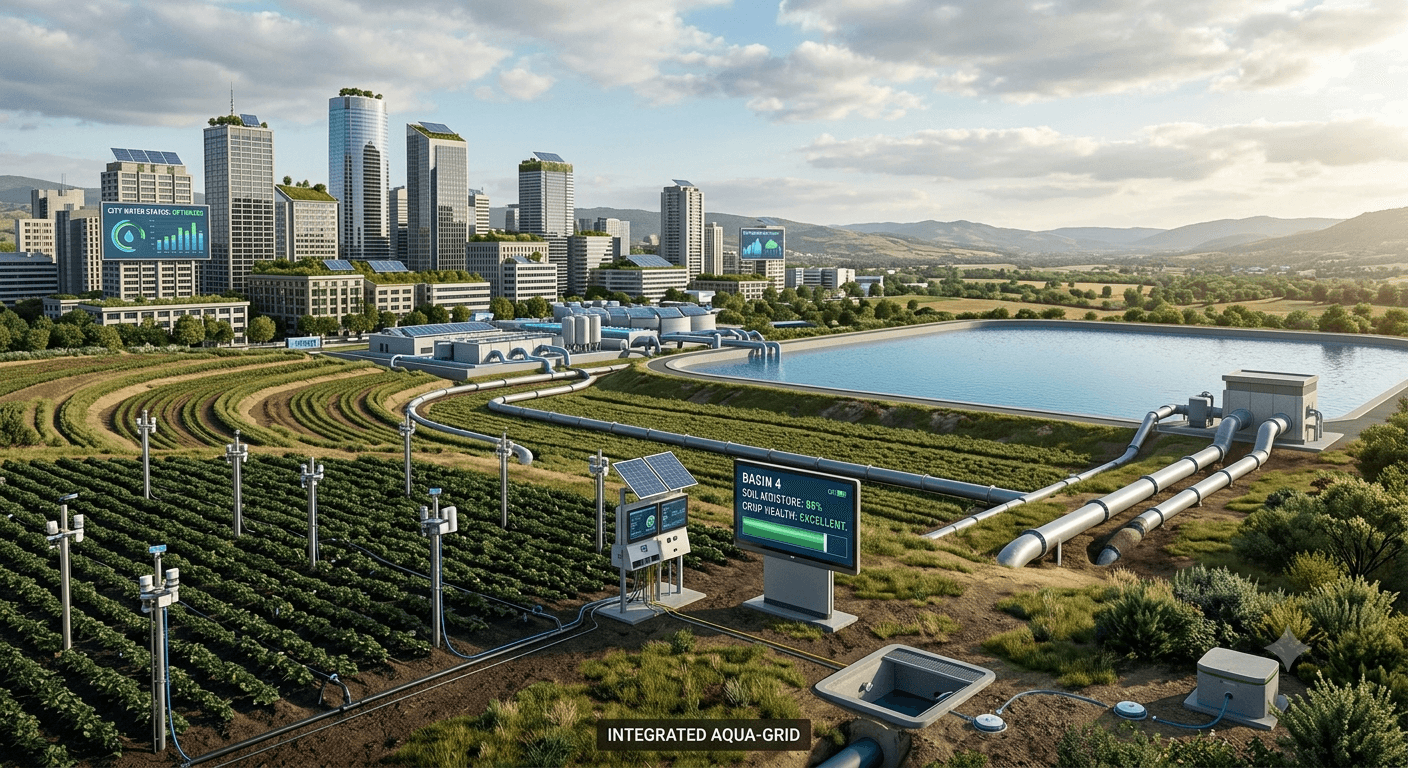
Cities are under growing pressure to manage both water shortage and flood risk at the same time. Urban climate resilience depends on systems that can detect leaks, balance demand, store stormwater, and protect supply during disruptions. Digital tools are helping city managers move from reactive maintenance to predictive management.
This matters because urban water systems are often complex, interconnected, and expensive to repair after failure. A resilience-focused approach uses data, storage, reuse, and distributed infrastructure to lower vulnerability. The goal is not just to deliver water, but to keep essential services operating when climate conditions become less predictable.
Business and Policy
Water risk is now a business issue as well as a climate issue. Companies in manufacturing, food, real estate, and energy are paying more attention to water availability because shortages can disrupt operations and increase costs. As a result, water tech is increasingly seen as an investment in continuity, not just sustainability branding.
Policy and financing remain important because many water technologies need public support, regulation, and long-term funding to scale. Without that support, promising systems can stay stuck in pilot phases. With the right policy environment, though, water tech can move from isolated innovation to essential infrastructure.
Challenges Ahead
Despite strong momentum, water tech still faces barriers such as cost, technical complexity, and uneven adoption. Smaller communities and utilities may not have the capital, expertise, or staff needed to deploy advanced systems. That means even highly effective technologies may scale slowly unless implementation is made simpler and more affordable.
Local fit is another challenge because water systems differ widely by climate, governance, and infrastructure quality. A solution that works in one city may fail in another if it does not match local water patterns or institutional capacity. The best resilience strategies are therefore designed around real local conditions rather than generic assumptions.
Future Outlook
The future of water tech in 2026 is moving toward integration, intelligence, and resilience. Instead of relying on a single solution, the strongest systems combine monitoring, leak detection, reuse, harvesting, and forecasting into one coordinated strategy. This makes water management more adaptive and better prepared for climate volatility.
The most important technologies will be the ones that reduce waste, diversify supply, and help decision-makers act early. That includes tools for cities, farms, industry, and households. As climate pressure grows, water tech will increasingly define how well communities can adapt and thrive.
Conclusion
Water tech and climate resilience 2026 is about turning water systems into smarter, safer, and more flexible infrastructure. From leak detection and reuse to rainwater harvesting and digital monitoring, these solutions are helping communities adapt to droughts, floods, and uncertainty. The strongest climate strategies will be the ones that use water more efficiently while building resilience into every layer of the system.


 Alex
Alex