
Jul 28, 2026
Why Non-Invasive Neurotech Is Becoming the Industry’s Next Big Wave in 2026
 Arjun
Arjun- •
- 09 MIN TO READ
 Divya Nair
Brain-Computer Interfaces Take a Big Step Toward the Mainstream
Brain-computer interfaces (BCIs) used to be a research curiosity confined to a handful of academic labs and a very small number of trial participants. That's changed meaningfully in the past few years, as multiple companies have moved implanted and non-invasive systems into larger, longer-running human trials, with real, documented improvements in patients' daily lives.
At its core, a BCI reads electrical activity from the brain and translates it into a command a computer can act on, moving a cursor, controlling a robotic arm, or, increasingly, generating synthesized speech from someone who has lost the physical ability to talk. For people living with paralysis from spinal cord injury, ALS, or stroke, that translation layer is the difference between being locked out of communication and being able to participate in a conversation in something close to real time.
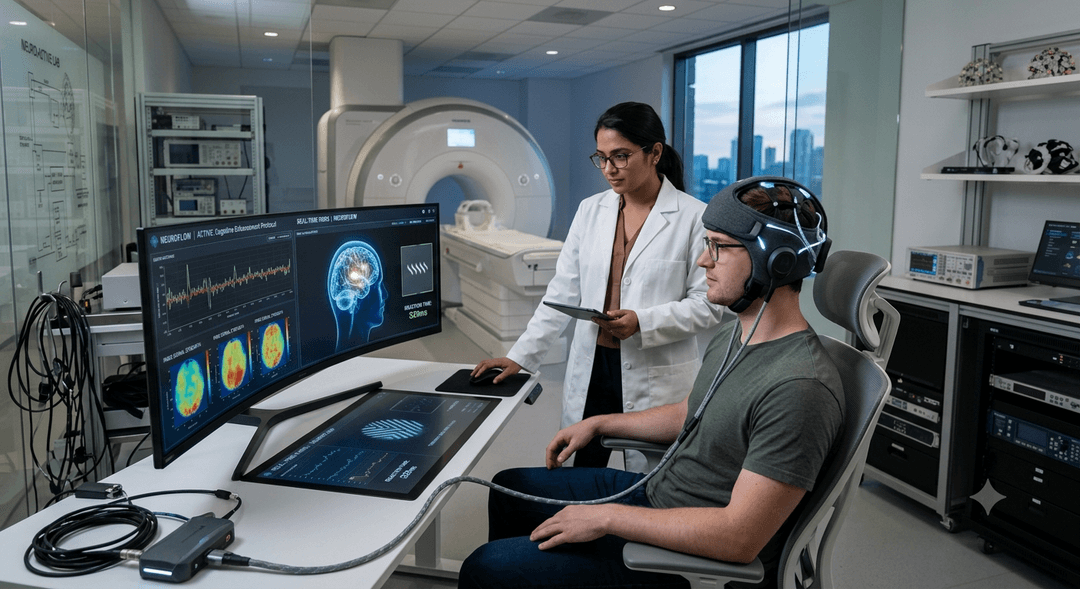
The field is split between two broad approaches. Implanted systems, electrodes placed directly on or in the brain, offer much higher signal resolution and are what's driving the most striking trial results, but they require actual brain surgery and carry the risks that come with it. Non-invasive systems, worn externally like a cap or headband, are far lower risk and easier to deploy widely, but currently produce a noisier, lower-resolution signal that limits what they can reliably do.
Among the various BCI applications being tested, restoring communication for people who have lost the ability to speak has produced some of the most unambiguous results, systems that decode intended speech from brain activity and convert it to synthesized voice output with a growing vocabulary and a shrinking delay between intent and spoken output.
The milestone that matters isn't a faster cursor. It's a person who couldn't say a sentence to their family for years, saying one again. Neurotechnology clinical researcher
Implanted electrodes degrade in signal quality over time as scar tissue forms around them, a durability problem the field hasn't fully solved. Non-invasive systems need to close their resolution gap to expand what they can reliably do. And every BCI company is navigating genuinely new ethical and regulatory territory around a device that reads directly from the brain, questions about mental privacy and data ownership that existing medical device frameworks weren't written with in mind.
Broad, non-medical consumer adoption of BCIs remains a long way off. What's realistic and already happening is expanded clinical use for people with severe motor and speech impairment, a genuinely significant outcome on its own, even before the technology reaches any wider audience.
Arjun