
Humanoid Robots Leave the Lab: Factories and Warehouses Go Robotic
 Divya Nair
- •
- 03 MIN TO READ

Humanoid Robots Leave the Lab: Factories and Warehouses Go Robotic
For decades, industrial robots meant a fixed arm bolted to the floor, doing one motion thousands of times a day. That model works brilliantly for a single repetitive task and fails completely the moment a process changes. Humanoid robots are being built to solve exactly that gap: a general-purpose body that can walk into a facility designed for humans and use the tools already there.
Why the Human Form Wins Here
Warehouses, assembly lines, and back-of-store spaces were built around human dimensions, doorways, shelf heights, tool grips, pedal-operated equipment. A wheeled or fixed robot needs the environment redesigned around it. A humanoid, at least in theory, doesn't. That's the entire pitch: retrofit the robot, not the building.
What's Actually Deployed Today
The current generation is running narrow, supervised pilots, moving bins between conveyor stations, loading and unloading pallets, performing basic quality inspection. These are not autonomous generalists yet. Most still operate with a human supervisor nearby and a fairly constrained task list. But the pace of iteration is fast: models that struggled with basic object handling eighteen months ago are now managing multi-step material handling with meaningfully fewer errors.
The Real Bottleneck Isn't Walking
Bipedal locomotion, long the flashy demo, is largely a solved problem for structured indoor floors. The harder engineering challenge is dexterous manipulation: reliably picking up an irregular object, adjusting grip on the fly, and recovering gracefully when something slips. That's where most of the current research budget is actually going.
Balance was the hard problem five years ago. Today the hard problem is a hand that can pick up an egg and a wrench with the same gripper. Robotics program director
Economics, Not Just Capability
Cost is the other half of the story. A humanoid unit still costs significantly more than a human worker's annual wage in most markets, but the calculus is shifting as manufacturing volume increases and battery, actuator, and compute costs fall. Several manufacturers have publicly targeted price points within the next few product generations that would make multi-shift deployment economically viable for large logistics operators.
What to Expect Next
Expect slower, more boring progress than the viral demo videos suggest, incremental gains in reliability, safety certification for working alongside humans, and deployment concentrated in a handful of high-volume, well-instrumented facilities before this expands broadly. The transition from lab demo to dependable coworker is a multi-year process, and it's currently underway.

Suggested Posts
All PostsAllAll PostsAll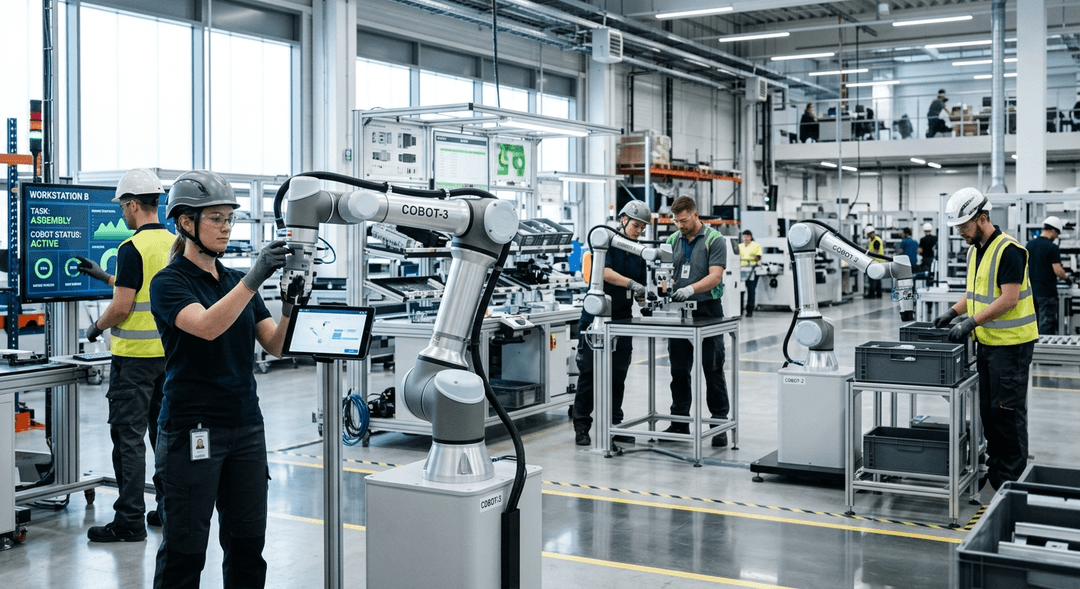
 Priya
Priya
Soft Robotics Breakthrough Lets Machines Handle Fragile Objects Like Humans
 Arjun
Arjun- •
- 02 MIN TO READ
AI wearables — smart glasses, AI earbuds, neural ear devices, health-tracking wearables.
- Arjun
- •
- 05 MIN TO READ